Freitag, 24. April 2015

Sant Jordi - the Catalan Day of Books and Roses

Buenos días y hola a todos,

today I want to deal with a very special celebration for Catalan people: on the 23. of april, la gente in Catalonia celebrate a day, dedicated to Sant Jordi (or Saint George). It is - in some way - their version of the well-known Valentines day tradition. Nevertheless, they celebrate both of them :-) 

It is really amazing and pleasant to see, how proud people in Barcelona, and Catalonia in general, are of their heritage and their origins. Whenever there is a local festial in a city nearby or when it is time for one of the many regional holiday celebrations, every single person knows about it and will also participate. And by saying everybody, you can take me literally. Even one of my maths professors at the university in BCN reminded us students of the day and encouraged, well almost kindly forced us to go and join the event. I take this as an example, since I know, people in maths are often said to "live in their own world" and do not care about their surroundings etc., which in this case may be especially true for academic people in this field :-) But as I said, it is not!

The celebration
So how is this day actually celebrated in BCN? The tradition claims, that on Sant Jordi's, guys gift girls with roses as a symbol of love, and in return, they receive a book. This practice is not only common between couples and lovers, but it is also done as a nice gesture at work or between friends.
If you fear that you won't get a rose for your spouse on that day, don't worry. There are stalls, where they sell roses, on literally every corner in the city. If you are lucky, you can also get this rose in combination with a discount for a nice romantic dinner. So what else do you need for a perfect evening ;-)
Tables full of roses everywhere (and of course the Catalan flag for independency, the Estelada)

People got very creative to stand out of all the sellers

Books everywhere. Would be like heaven, if they weren't mainly in Catalan...

Entire BCN just gathering at La Rambla and Plaza Catalunya


The legend
And the history? One of the most "accepted" or told stories is that once, in an endless country, there was a city called Silene, which was threatened by a dragon. The dragon devoured all the animals on the fields. To calm him down, once in a while, a lamb and a virgin - yes, the classic virgin - where chosen to be sacrificed for the dragon. Unfortunately, the dicision on the choice of the virgin was done by lot. So of course, one day it had to happen that the local princess was chosen to be sacrificed. But fortunately, just when the dragon was about to swallow the princess, a courages knight - Sant Jordi - appeared and killed the beast with a lance. According to the legend, a rose bush started to grow exactly at the location where he stabbed that dragon.

So due to that legend, on the Day of the Rose you give a rose to your loved ones. 

Unfortunately nobody could really give a reason why girls give books to the guys on that day. The best explanation I have found has nothing to do with the legend of Sant Jordi. 

It happened, that on the 23. of April 1616, Cervantes, author of Don Quijote  and considered the Shakespear of Spain, had died. And, as it is done in honour of Shakespear in England, the 23. of April was chosen to be the national book day. So they have maybe just combined those two traditions.

Anyway, that's it on Sant Jordi's
Hasta ahora!

Freitag, 10. April 2015

Tarragona - Catalonia´s Roman beauty

Bon día,

First of all I have toI know, it´s been a while since the last time I updated my blog, but too much is going on and I have been a bit busy during the last days. But here I am now.

Two weeks ago, I visited Tarragona, a small city about an hour down the coast starting from Barcelona. For those kind of day trips, taking the renfe is really a good option to travel, since it is definitely affordable (to Tarragona it was 7€ one-way). And public transport in general is pretty reasonable compared to Germany.
Amazing view through the Old Town on a beautiful day
Tarragona had its glory days back around Christ´s time, between 200 BC and 200 AD, where it was known as Tarraco. Back then, it was the capital of the Roman province Hispania citerior, or later known as Tarraconensis.
Spanish map during Roman times
Remainings of those times can still be seen in Tarragona today. Just by walking through the narrow streets of the old part of Tarragona, one can see amazing relicts of ancient times, and their beauty will surely leave you speechless. Ok, maybe I was a bit biased, since the weather was incredible and the sun put everything in grace, but still Tarragona is definitely worth a day-trip.
The amifiteatre romá. Unfortuately you have to pay to enter,
like it is for every place in Spain (at least it seems like)
Pretori romá in the upper right side

The place in front of the Torre del Pretori, where people where waiting for the easter ceremony

Narrow streets drawing their way through the old town.0

Fortunately, during the time I went to Tarragona I was able to see their typical Easter ceremony. While walking through the streets I caught myself wondering, where all the youngstes were, because you literally couldn´t see anybody between the age of 10 and 20. After a while, I found the answer: everybody was preparing for the ceremony.


The cathedral of Tarragona

Close-up

Another astonishing relict of Roman times is the Devil´s bridge, which used to be an aqueduct. I was lucky, because it had just recently reopened, so it was possible to walk on a man-made bridge older then 2 thousand years (before it was closed due to a suicidal act...). When I think about the fact, that this bridge was already standing there when Jesus Christ was born and it will probably also survive the next millenium, I can only step back, say "chapeau" and acknowledge what humans are capable of.

In front of the aqueduct with Zuza, a new-made friend from Poland

El Aqüeducte de les Ferreres, or "Pont del Diable" (Devil´s bridge)
 Finally to sum up, a little advice. If you ever go to Spain and see one of those beautiful orange trees in the city: DO NOT try to eat them :-) I do not honestly think that they are poisonous, but much too sour to be edible :-)
Delusive beauty
In this sense, see you next time.
Hasta ahora!

Freitag, 20. März 2015

Las Fallas en Valencia

¡Hola a todos!

Ahora voy a probar escribir un entrada en Español. Por favor, me perdona por los muchos errores :-)

Hay novedades sobre mi . He movarme del este del barrio l´Eixample al oeste, cerca del Plaça d´Espanya, una plaça de Barcelona muy importante porque es una estación de metro muy central y muchos turistas la visitan cada día. Se puede ver por ejemplo el Museu National d´Art de Catalunya (MNAC) y ademas cada viernes y sabado la Font Mágica, una attractión muy bonita a una fuerte con agua, musica y luz.
Panorámic de MNAC al Plaça d´Espanya

otra dirección -alguien esta llevantando por el foto...
La razón por la que movarme no son mis compañeros de piso, fuieron perfectos :-) Pero la distancia hasta la universidad ahora es mas mas corta, solo necesíto 15 minutos. Pero nos quedamos en contacto!

Fairwell con mis pasados CPs

Ahora und parte mas interesante: LAS FALLAS

Las Fallas es una fieste española de primavera que es celebrada en Valencia cada año. Las attractiónes principal son figuras muy altas de papel y de madera las que van a ser abrasada al final de la fiesta.

La vacacción fue organisada del ESN, el Erasmus Student Network. Es una asociación de estudiantes para estudiantes que organiza muchas cosas cada semana.

Valencia, tiempo perfecto
El origen de las Fallas no es exactamente claro. Se cree que en el pasado los carpinientos abrasaban las candelas despues del invierno, porque ya no las necesítaron. Pues he pasado que la fecha de esta combustión ahora es el día de sant josef, el patrón de los carpinientos.

Ahora las fallas han constructado de los clubs de fallas. Ademas la ciudas siempre hace una programa de fiesta incluido competiciónes y muchos fuegos artificiales. También hace las mascletás traditionales, contenido de muchos pertardos. Aunque es una tradición valenciana, la no me gusta mucho porque es como los pertardos ruidos los que las niños utilizan durante la nochevieja.

Ofrena de Flors

La Ciudad de las Artes y de las Sciencias es un parte muy futuristico de Valencia. Despues de la dictadura de Franco la gente quizo un parque para su, para relajarse y para las artes. Ahora es un campo muy famoso y bonito con museos de sciencia, un cine de 3D y otras cosas.
izquierda: Ozeanográfic - el acuario mas grande de Europa
derecha: el cine de 3D l´Hemisféric


Para terminar: la comida
Valencia es el origen de paella, una comida de arroz (quizas de pasta) que contiene carne y fruta de marisco. Me siente muy alegre cuando al final he podido probar la paella valenciana con pollo y conejo. Mmmmh me gusta!!!
Es suficiente para mi..??

Sí, fue suficiente :-)

Adiós, hasta pronto!

Las Fallas in Valencia

¡Hola a todos!

Es gibt wieder etwas zu erzählen. Ich bin vom Osten des Stadtteils l´Eixample in den Westen gezogen, etwa 100 m weg vom Plaça d´Espanya, einem der zentralen Verkehrsknotenpunkte für Metro und Nachtbusse, sowie einem der zentralen Plätze Barcelonas auf dem sich regelmäßig Touristen tummeln. Zu sehen gibt es dort u.a. das Museu National d´Art de Catalunya (MNAC) sowie jeden Freitag und Samstag Abend das Font Mágica, einem Spektakel aus Wasserfontänen im Klang der Musik.
Blick vom MNAC runter zum Plaça d´Espanya

Noch einmal aus umgekehrter Richtung - irgendjemand ist mir leider durch das Bild geflogen...
Grund für meinen Auszug waren bestimmt nicht die Mitbewohner, die waren super :-) Allerdings hat sich durch den Umzug für mich die Strecke zur Universität in etwas gedrittelt und das Preis-Leistungs-Verhältnis des Appartements ist überdeutlich besser. Aber wir bleiben in Kontakt!
Fairwell mit meinen alten Mitbewohnern

Aber jetzt zum interessanteren Teil: LAS FALLAS

Die Fallas sind ein spanisches Frühlingsfest, welches jedes Jahr in Valencia gefeiert wird. Die Hauptattraktionen sind meterhohe Figuren aus Pappmaché, welche zum Abschluss des Festes feierlich angezündet und verbrand werden.

Organisiert wurde der Trip vom ESN, dem Erasmus Student Network. Das ist ein Verein von Studenten für Studenten, der jede Woche mehrere Events veranstaltet.
Valencia, perfektes Wetter
Der Ursprung der Fallas ist nicht exakt überliefert. Gemutmaßt wird, dass früher Zimmerer und Handwerker nach dem Winter ihre alten Kerzen und Lampen verbrannt haben, da diese nicht mehr gebraucht wurden. Mit der Zeit wurde der Termin für diese Verbrennung zum Tag des Heiligen Josefs, dem Schutzheiligen der Zimmerer.
Heutzutage konkurrieren regionalen Fallas-Vereine um den Titel der besten Fallas.
Neben diesen Statuen wird von der Stadt ein riesiges Rahmenprogramm mit Wettbewerben und Feuerwerken veranstaltet. inklusive den traditionellen Mascletás - lange Schnüre bestehend aus Knaller, die im Rhythmus der Musik explodieren. Auch wenn das in Valencia Tradition ist, mich hat es eher an die nervigen Böller erinnert, die Teenager an Silvester durch die Gegend werfen.
Ofrena de Flors - die Heilige Schutzpatronin der Schutzlosen (im Aufbau)

Die Stadt der Künste und der Wissenschaft (Ciudad de las Artes y de las Sciencias) ist der futuristische Teil der sonst sehr traditionellen Stadt Valencia. Nach der Diktatur Francos wollte die Bevölkerung einen Park für sich, zur Entspannung und für die Kunst. Geworden ist daraus ein Wunderwerk für Auge und Geist. Für den Geist, da dort einige Wissenschaftsmuseen und Planetarien sind, unter anderem Europas größtes Aquarium. Für´s Auge: seht selbst.
Links: Ozeanográfic - das größte Aquarium Europas
Rechts: das 3D-Kino l´Hemisféric

Blick auf die Poolanlage


Zum Abschluss das, was natürlich nie fehlen darf: das Essen
Valencia ist der Ursprung der Paella, ein Reisgericht (manchmal auch mit Pasta) mit Fleisch und/oder Meeresfrüchten. Dementsprechend glücklich war ich, als ich endlich eine traditionelle paella valenciana mit Hähnchen und Kaninchen probieren durfte. Und ich sage euch: das war das Warten wert!!!
Ob das für mich reicht..??

Ich musste mich dann doch mit weniger zufrieden geben :-)

In diesem Sinne, hasta pronto!

Las Fallas in Valencia

¡Hola a todos!

There is some new news. I have moved from the eastern part of l´Eixample to the western part, about 100 m away from the famous Plaça d´Espanya, a central traffic junction for metro and night busses, and also one of the central places of Barcelona, where usually a lot of tourists go. For reason, since there is a lot to see: e.g. the Museum of National Catalan Art (MNAC) or the Font Mágica every Friday and Saturday evening, which is an amazing spectacle of a combination of water fontains and music.

View from MNAC down to the Plaça d´Espanya

From the other direction - unfortunately somebody was hovering through the picture...
For sure the reason for moving out were not my flatmates, they where perfect :-) But due to the change of my flat it only takes a thirt of the time to university than before. And of course the cost-benefit-ratio of my new apartment is much better. But we will stay in contact!

Fairwell with my former flatmates

But now the interesting part: LAS FALLAS

The fallas is a Spanish spring festival, which is celebrated in Valencia every year. The main attractions are figures several meters high and made of paper and wood, which are inflamed and burnt during the end of the festival.
The trip was organized by the ESN, the Erasmus Student Network, an organization by students for students to help the incoming students and to ease the exchange of experiences and they usually organize several events every week.

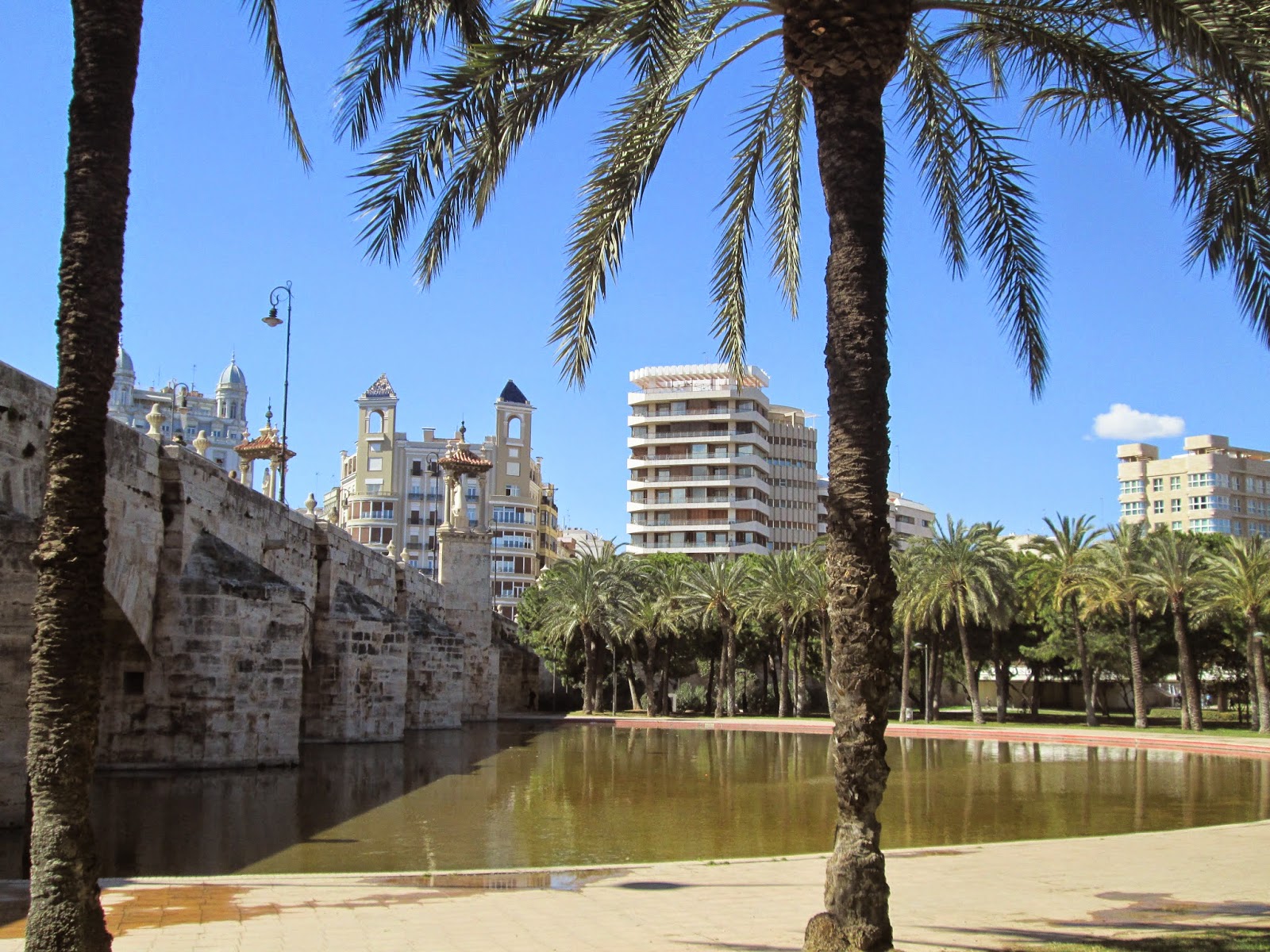
Valencia, perfect weather
tThe origin of las Fallas is not exactly known. It is assumed that in the past carpenters and handymen burnt their old candles and lights on the streets after winter, since they would not need them anymore. Coming with time, the date for this ceremony emerged to the day of Holy Joseph, the patron saint of carpenters.
Nowadays regional Fallas-clubs compete against each other to have the best Falla. Besides those statues, the city will have a huge side program including competitions and fireworks, also the traditional Mascletás - a long string consisting of firecrackers that explode to the beat of the music. Although this is Valencian tradition, it reminds me more of the annoying bangers I know from my childhood times on New Years Eve.

Ofrena de Flors - the Holy Saint of the unprotected (building process)

The city of arts and science (Ciudad de las Artes y de las Sciencias) is the futuristic part of the usually more traditional city Valencia. After Franco´s dictatorship the population wanted a place for their own, a park to rest and a place for art. This resulted in a marvellous place for both your eyes and your mind. For your mind, because there are science museums and a planetarium, and also Europe´s biggest aquarium. For your eyes: just see :-)

Left: Ozeanográfic - Europe´s biggest aquarium
Right: the 3D-cinema l´Hemisféric

View to the poolside


To finish, there is still something missing: the food
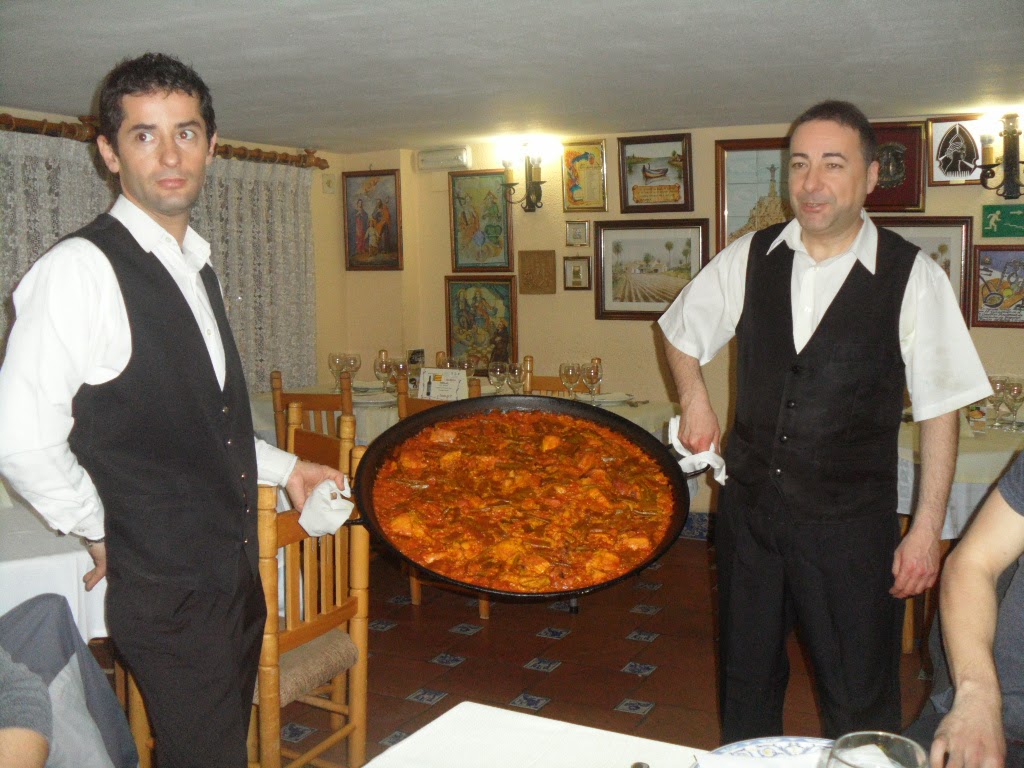
Valencia ist the origin of paella, a dish usually consisting of rice (or sometimes pasta) and some kind of meat or seafood. Now you can imagine how happy I was when I finally got to try the traditional paella valenciana with chicken and rabbit meat. And I tell you, it definitely was worth waiting for it!!

If this is enough for me..??

In the end I had to be satisfied with a smaller plate :-)

That´s it, hasta pronto!